


Photo by Christian Buehner on Unsplash
Val Kilmer’s recent death from throat cancer has put head and neck cancers in the spotlight. This talented and handsome actor-comedian fought throat cancer for eleven years, had two tracheotomies, chemo, radiation, and inspired many people with his courageous battle. We will talk about how an imbalanced oral microbiome can contribute to head and neck cancers and what dentists and consumers can do to stack the deck in their favor. Hint: visiting the dentist, testing, and balancing the oral microbiome are some of my main takeaways, which you will find summarized at the end of this article. You can also check out my earlier article on this topic, Build the Microscopic Army in Your Mouth to Fight Oral Cancer and Improve Dental Health.
We are grateful to our sponsor, OralDNA Labs, for making this blog possible.
Every April, there is a campaign to bring awareness to head and neck cancers. What exactly are head and neck cancers?
Head and neck cancers affect the mouth, throat, sinuses and nose, salivary glands, or larynx (the voice box). Their usual hallmark is that they involve squamous cells, the types of cells that line the mouth, throat, and sinuses. Think of those wet, mucous-rich surfaces, like the mouth lining.
What are some of the root causes of head and neck cancers?1
- Alcohol
- Human papillomavirus (HPV)
- Immune dysfunction
- Increasing age
- Oral dysbiosis2,3
- Poor oral hygiene
- Tobacco
Val Kilmer was a chronic smoker, which increased his risk of developing throat cancer.
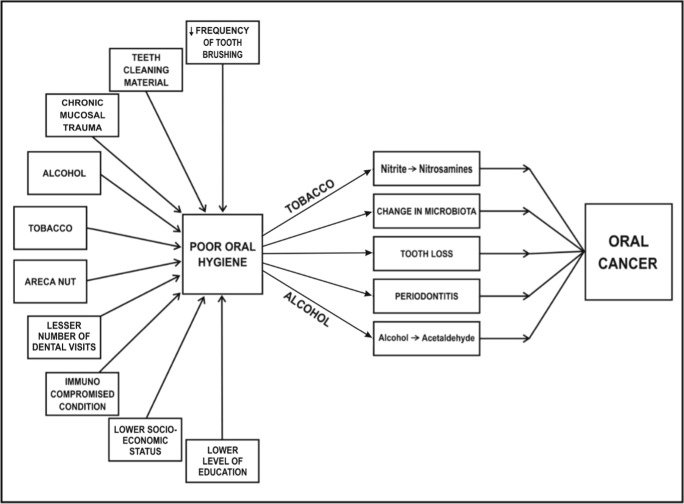
How poor oral hygiene and other factors may cause oral cancer. Mathur, R. and colleagues.1
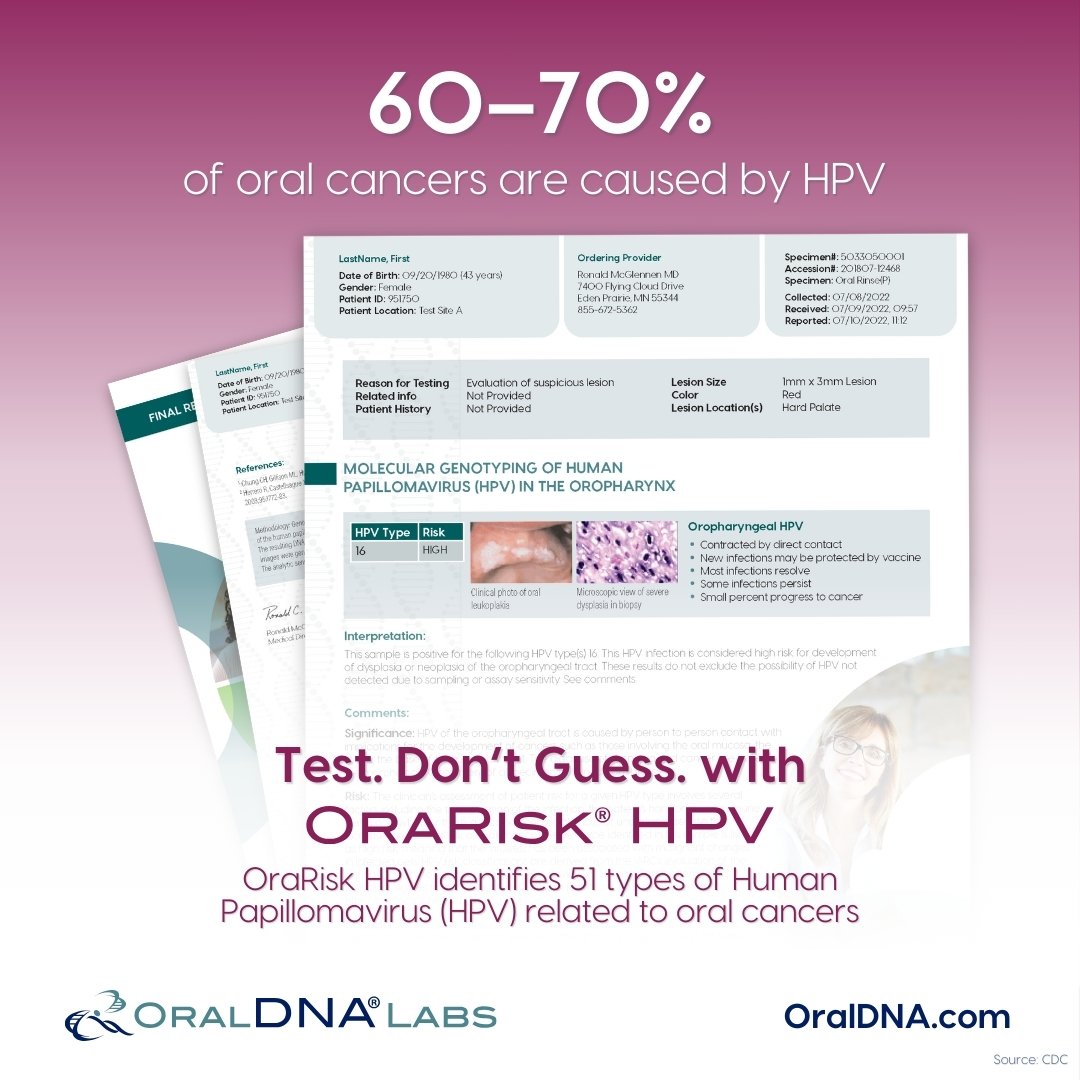
Cancers are complicated, multi-factorial diseases. We are still trying to understand and conquer them. But one area that we can address is infection. Certain microbes have been implicated in cancers, such as Helicobacter pylori.4 Seventy percent of throat cancers (oropharyngeal cancers) are caused by HPV infection. There are multiple HPV types that have been associated with oral cancer; some posing low, moderate, or high risk. HPV 16 and 18 are the most common high-risk types. HPV 16 is a common virus that is transmitted sexually and can cause oropharyngeal cancer, penile cancer, and cervical cancer in women.
The danger of an imbalanced oral microbiome hits home when we consider the uncanny connection between cancers and dental hygiene. Before I lay out the statistics, let me refresh you on the backstory.
The oral microbiome is the collection of microbes (bacteria, fungi, parasites, bacteriophages, and viruses) that live in the mouth. They do many good things for us, but occasionally they get out of balance. When that happens, bad, trouble-making microbes can take over and cause harm. These few, bad players are known as pathogens. When bad microbes take over and throw the microbiome out of balance, we call that “dysbiosis.” This can also happen when people slack off on their dental hygiene habits at home and stop going in for dental cleanings.
You may have oral dysbiosis if you have these symptoms and signs of illness:
- Cavities
- Bleeding gums
- Gum disease
- Bad breath
- Mouth infections
- Tooth loss
So, here’s the equation…
Healthy oral microbiome = good dental hygiene = healthy mouth and teeth
Oral dysbiosis= poor dental hygiene = unhealthy mouth and teeth*
Now, with that background in place, let’s look at what the research says about oral dysbiosis and cancer.5
- Good dental hygiene reduces the risk of oral cancer by 62%.
- People who have lost teeth (a sign of gum disease and oral dysbiosis) have an increased risk of gastric cancer and pancreatic cancer.
- People with gum disease have four times higher risk of head and neck cancer and five times higher risk of tongue cancer!
- People who don’t brush have two times higher risk of esophageal cancer.
All of this points to an undeniable link between oral dysbiosis and head and neck cancers. When you stay on top of your dental hygiene and brush regularly, your risk of oral cancer and esophageal cancer plummets. When oral dysbiosis is raging in the mouth, like in gum disease, the risk of head and neck cancers skyrocket- up to 4 or 5 times! That means if you maintain a healthy and balanced oral microbiome, you are helping to defend yourself from cancers of the head and neck.
*I want to acknowledge that there are people who have impeccable oral hygiene and still struggle with oral dysbiosis. This is hard for practitioners and patients to understand, but may involve other root causes that need attention.

Why do some people have pathogenic microbes, but they don’t get cancer?
This is a million-dollar question and one that will probably always fascinate us. HPV is a perfect example; the virus responsible for 70% of throat cancer. Everyone carries HPV at some point in their lives, yet it develops into life-threatening cancer in only a small percentage. Only 0.3 – 1.3% of HPV infections turn into cancer. The body seems to clear the other 98%. This virus is everywhere. But most people can get rid of it before it does any lasting damage and keep it away for good. Scientists believe that a healthy microbiome may prevent HPV from causing cancer, while an unhealthy microbiome might make it worse.6 Similarly, other studies have suggested good mouth bacteria may help prevent head and neck cancers.7
In medicine, it is well known that pathogens do not cause disease in all people. The famous example is Typhoid Mary who managed to carry typhoid fever and infect many people, while never showing the first symptom of it! Here are a few explanations for why some people with infections have no symptoms at all:
- Immune response
- Inflammation
- Microbe’s ability to go dormant
- Microbiome
- Virulence factors of the microbe
- Coinfections
I have written about this phenomenon before, in my book, Heal Your Oral Microbiome. When scientists studied the human oral microbiome, many perfectly healthy people had nasty pathogens in their mouths.8 But those pathogens were kept under control. This is the rule, not the exception. Our mouths are not sterile. They are full of microbes- both good and bad. The question is: Who is in charge? The good microbes… or the bad ones?

How do head and neck cancers take hold?
If we want to stop head and neck cancers, it helps to understand how they start in the first place.9 Remember that cancer cells are damaged cells that can live forever. Cancer requires one or more of the following processes to get started and take over.
- Inflammation. When there is background inflammation (think redness and swelling and pain), cells can malfunction.
- Harmful byproducts. Bad microbes can make toxins and other harmful waste products that damage a person’s cells.
- Zombie cells. This is when a cell’s own self-protective mechanism to commit suicide (called apoptosis) fails to work, and the cell lives forever. It is the “walking dead.”
- Suppress the immune system. If your immune system is down in the dumps, it cannot identify and kill rogue cancer cells to keep you safe.
- DNA changes. DNA is the cell’s blueprint and if DNA is damaged, like with UV light, toxins, radiation, or oxidative stress, it can permanently harm a cell, turning it into a cancer cell.
- Weak microbiome. Good bacteria boost the immune system and help defend us from infections. They even make anticancer chemicals that help us stay healthy. When good bacteria are weak, they cannot help defend against cancer.
What can you do to decrease the risk of head and neck cancers?
If you have head and neck cancers in your family, it is particularly important for you to defend yourself. The main things you can do are: take steps to promote a healthy oral microbiome, get checked for oral cancer regularly, and test for pathogenic bacteria and HPV, which can be treated. Test for inflammation and address it if it is high. Improve your immune response. There are also vaccinations against HPV.
A healthy oral microbiome may be one of your best defenses against head and neck cancers. If you have symptoms of oral dysbiosis, like cavities, bleeding gums, or deep periodontal pockets, then you are at risk of oral and throat cancers, but other cancers, as well. You will want to improve the balance of microbes in your mouth. If you can shift the balance in your mouth more toward beneficial, friendly oral microbes, it will turn off inflammation, improve wound healing, and boost the immune system. This is easier said than done, especially if you have a lifetime of oral health struggles.
I suggest a whole-foods diet rich in colorful vegetables and fiber, free of sugar, processed foods, and sweetened drinks. You can also build good bacteria in the mouth with dental probiotics or a probiotic mouthwash. I recommend probiotics (taken orally) for gut health, which have good evidence to support prevention of colorectal cancer. However, evidence for anticancer effects in the mouth are limited.
Look for a biological or holistic dentist to help you, and get your dental checkups and cleanings on time. Visit your dentist for oral cancer exams. Some offices will do free oral cancer screenings in April. Many of us do not want to rush to the doctor or the dentist unless there is really something to be worried about. On the other hand, you wouldn’t want something dangerous to go on and on without being detected.
Here are some symptoms of head and neck cancers to be alert to:
- Lump in the neck that isn’t painful
- A sore in the mouth that won’t heal
- Coughing up blood
- Hoarse voice
- Loose teeth
- Pain when swallowing
Testing is a powerful way to get ahead of the curve and prevent head and neck cancers. Dentists can order tests looking at the most common harmful bacterial and viral pathogens in the mouth, including HPV. OralDNA Labs has the OraRisk® HPV Profile, which tests 51 types of HPV related to oral cancers. Other saliva tests zoom in on harmful oral bacteria. Even consumers can order certain oral microbiome tests now. With these tests you can get an idea if bad bacteria are in charge of the mouth. If so, they present a real risk for encouraging inflammation, creating toxins, causing damage, and promoting harmful changes to cells. They can set the stage for cancer.
I also suggest testing your high-sensitivity C-reactive protein, or hs-CRP, every year. This is a gold standard marker of systemic inflammation and can tell you about your risk of a cardiac event. When there are hidden infections in the mouth, CRP can go high. We especially have to be aware of failed root canals, where infections can brew under the surface, unbeknownst to patient or practitioner. Hs-CRP can help detect these by measuring inflammation in the blood.
If your dentist finds that unhealthy microbes are flourishing in your mouth, they will want to treat them. They may recommend deep cleaning and antiseptic treatments that kill bad bugs. Hopefully, they will also recommend rebuilding the good bacteria with probiotics and a fiber-rich, colorful diet of whole foods.
Proper nutrition promotes immune function in the mouth to ward off problem microbes. It also boosts the immune system to effectively identify and destroy unhealthy rogue cells. I go into the best vitamins for oral health here. Making sure you are getting enough folate and eating a diet high in fruits and vegetables is a good first step, since studies show that folate deficiency and a diet low in fruits and vegetables can encourage HPV and oropharyngeal cancer.10

Sketch by Will Conrad @willconradart on Instagram
Leverage Friendly Bacteria to Fight Head and Neck Cancers
Val Kilmer’s cause of death was pneumonia, but it was the end result of a long battle with throat cancer that took him too early. This year, there will be 67,000 people who receive a diagnosis of head and neck cancer. Bacteria and viruses in the mouth can set a person up for the development of mouth cancer, throat cancer, and even other cancers. However, friendly bacteria can help to ensure they do not. That makes the oral microbiome a good candidate for preventing oral disease and cancer. Dentists and physicians can test for oral HPV and oral pathogens that can promote cancer. Brushing teeth, doing regular dental cleanings, and treating gum disease help to balance the oral microbiome and reduce the risk of head and neck cancers. Promoting good microbes in the mouth and discouraging pathogens, testing and monitoring, decreasing inflammation, and boosting immunity can go a long way to reducing the number of people who have to battle cancers of the mouth and throat.

Balance the Oral Microbiome to Prevent Cancer
- Get my book, Heal Your Oral Microbiome.
- Brush, floss, and stay on top of your dental health visits.
- Get screened; some dental offices do free screening in April for Oral Cancer Awareness.
- Eat whole foods, especially colorful veggies and fiber.
- Eliminate sugar and refined carbohydrates.
- Take chewable probiotics containing Streptococcus salivarius.
- Test for HPV in the mouth as well as for oral dysbiosis and pathogens.
- Test for inflammation with a blood hs-CRP test.
- Stop smoking.
- Stop drinking alcohol and avoid alcohol-containing mouthwash.
- Choose organic foods and non-toxic dental products to reduce cancer-promoting chemicals in the mouth.
- Optimize nutritional status for improved immune function.
Many thanks to Ellie Campbell, DO, who helped with my research on this blog.
References
- Mathur R, Singhavi HR, Malik A, Nair S, Chaturvedi P. Role of Poor Oral Hygiene in Causation of Oral Cancer-a Review of Literature. Indian J Surg Oncol. Mar 2019;10(1):184-195. doi:10.1007/s13193-018-0836-5
- Kwak S, Wang C, Usyk M, et al. Oral Microbiome and Subsequent Risk of Head and Neck Squamous Cell Cancer. JAMA Oncol. Nov 1 2024;10(11):1537-1547. doi:10.1001/jamaoncol.2024.4006
- Ting HSL, Chen Z, Chan JYK. Systematic review on oral microbial dysbiosis and its clinical associations with head and neck squamous cell carcinoma. Head & neck. Aug 2023;45(8):2120-2135. doi:10.1002/hed.27422
- Zhao H, Chu M, Huang Z, et al. Variations in oral microbiota associated with oral cancer. Scientific reports. Sep 18 2017;7(1):11773. doi:10.1038/s41598-017-11779-9
- Meurman JH. Oral microbiota and cancer. Journal of oral microbiology. 2010;2doi:10.3402/jom.v2i0.5195
- Vyshenska D, Lam KC, Shulzhenko N, Morgun A. Interplay between viruses and bacterial microbiota in cancer development. Semin Immunol. Aug 2017;32:14-24. doi:10.1016/j.smim.2017.05.003
- Hayes RB, Ahn J, Fan X, et al. Association of Oral Microbiome With Risk for Incident Head and Neck Squamous Cell Cancer. JAMA Oncol. Mar 1 2018;4(3):358-365. doi:10.1001/jamaoncol.2017.4777
- Segata N, Haake SK, Mannon P, et al. Composition of the adult digestive tract bacterial microbiome based on seven mouth surfaces, tonsils, throat and stool samples. Genome Biol. 2012;13(6):R42. doi:10.1186/gb-2012-13-6-r42
- Lan Z, Liu WJ, Cui H, et al. The role of oral microbiota in cancer. Front Microbiol. 2023;14:1253025. doi:10.3389/fmicb.2023.1253025
- Galeone C, Edefonti V, Parpinel M, et al. Folate intake and the risk of oral cavity and pharyngeal cancer: a pooled analysis within the International Head and Neck Cancer Epidemiology Consortium. Int J Cancer. Feb 15 2015;136(4):904-14. doi:10.1002/ijc.29044

At OralDNA® Labs, we empower healthcare providers to enhance oral health through evidence-based care with salivary diagnostics. Our comprehensive menu of 9 tests, including bacterial, viral, genetic, and fungal tests, enables providers to address a wide range of oral health concerns. We offer a non-invasive, quick, and easy collection process, providing precise and reliable results from our CLIA- and CAP-accredited laboratory.
Our most popular test, MyPerioPath®, identifies and measures 11 pathogenic bacteria that cause periodontal disease, while Alert 2™ assesses genetic risk for periodontal disease and identifies the same 11 causative pathogens. High levels of these bacteria are linked not only to symptoms like bad breath, painful and bleeding gums, and tooth loss, but also to an increased risk of life-threatening diseases beyond the mouth.
Testing bridges the gap between oral and systemic health. Test. Don’t Guess. Learn more at OralDNA.com.
Cass Nelson-Dooley, MS, is a researcher, author, educator, and laboratory consultant. She studied medicinal plants in the rain forests of Panama as a Fulbright Scholar and then launched a career in science and natural medicine. Early on, she studied ethnobotany, ethnopharmacology, and drug discovery at the University of Georgia and AptoTec, Inc. She joined innovators at Metametrix Clinical Laboratory as a medical education consultant helping clinicians use integrative and functional laboratory results in clinical practice. She owns Health First Consulting, LLC, a medical communications company with the mission to improve human health using the written word. Ms. Nelson-Dooley is an oral microbiome expert and author of Heal Your Oral Microbiome. She was a contributing author in Laboratory Evaluations for Integrative and Functional Medicine and Case Studies in Integrative and Functional Medicine. She has published case studies, book chapters, and journal articles about the oral microbiome, natural medicine, nutrition, laboratory testing, obesity, and osteoporosis.

