


Cardiovascular disease is the #1 killer across the globe. But you know what? No one really mentions that it is reversible. That’s right; it doesn’t have to be a life sentence. Diet and lifestyle are what heart disease is all about. Now, eating a healthy diet rich in vegetables and whole foods and frequent exercise may not be an easy thing for everyone to put into practice. But, isn’t it nice to know that you could have a longer, better, higher-quality life by putting some simple daily habits into place?
There is controversy about the best way to treat heart disease. Of course, in integrative and functional medicine, we seek to treat the root causes of heart disease, not just the symptoms. While mainstream medicine focuses on lowering LDL cholesterol, commonly known as the “bad cholesterol,” with medications, integrative and functional medicine tries to turn off inflammation by addressing the root causes such as blood sugar, the microbiome, and therapeutic diets.1-4 I will not tackle the strategy of lowering high cholesterol, as a number of books have been written on this. Instead, I am going to review some of the common action steps to beat heart disease, and a few not-so-common steps. Clinicians and consumers, heart disease is the #1 health risk for every human around the world. Let’s not join the long list of heart disease statistics. Instead, incorporate these 5 natural steps into your daily life to improve circulation and blood pressure and reduce the risk of heart events. Scroll to the bottom of this blog for a short list of action items.
We are grateful to our sponsor, DaVinci Laboratories, for making this blog possible.
What is Coronary Heart Disease?
Nearly half of all adults in the US have coronary heart disease, the most common type of cardiovascular disease. When fatty deposits, or plaque, build up on the inner walls of arteries, it causes the “pipes” that move your blood to get stiff and narrow. Blood has a harder time moving, which causes high blood pressure. If blood can’t reach the heart easily, then heart cells die (heart attack) and the heart can’t pump blood effectively. And if plaque builds up heavily or gets dislodged, it can block blood flow completely. We can experience that as chest pain, a heart attack, or a stroke.

What Is Cardiometabolic Disease?
Cardiometabolic disease is a group of health problems involving both the heart and metabolism (how your body uses sugar and fat for energy). It includes risk factors like high blood pressure, high blood sugar, insulin resistance, obesity, and high cholesterol. Together, these factors can stack up and increase your risk of developing cardiovascular disease. The term “cardiometabolic” helps show the intimate relationship between cardiovascular health and sugar metabolism, since high blood sugar and high insulin can damage blood vessels over time. If not addressed early, this damage can lead to heart attack, stroke, or type 2 diabetes.
The Conventional Medical Approach to Heart Disease
Conventional medicine usually focuses on diagnosing and treating heart disease once clear risk factors or damage are present. Doctors often prescribe medications to lower cholesterol, reduce blood pressure, thin the blood, or control blood sugar. The goal is to reduce immediate risk and prevent serious events like heart attack or stroke. Treatment is often based on standard lab ranges that define when a number is officially “too high.”
The Integrative and Functional Medicine Approach to Heart Disease
Integrative and functional medicine looks at heart disease as the result of deeper imbalances — especially blood sugar problems, insulin resistance, chronic inflammation, poor gut health, stress, and nutrient deficiencies. Instead of waiting for lab values to cross into the disease range, this approach looks for early warning signs and aims for optimal numbers, not just “normal” ones. The focus is on correcting root causes through nutrition, lifestyle changes, targeted supplementation, stress reduction, and movement. The key difference is that conventional care often manages disease after it appears, while integrative care works to prevent it ahead of time.

5 Steps to Heart Health
#1. Lower Your Blood Sugar
While we have been focused on fats and cholesterol for decades when it comes to heart health, research is now showing that high blood sugar is the real enemy. People are much more likely to have stroke or heart attack if their blood sugar is high. That’s because high sugar damages everything it touches- especially blood vessels.
These tests are critical for understanding your blood sugar: fasting blood glucose, hemoglobin A1c, and fasting insulin. These tests help determine if your body is using sugar efficiently or not. The ranges on typical blood tests help doctors diagnose disease, not prevent it. Functional lab ranges (meaning optimum ranges for health) are blood sugar at 75-85 mg/dL, hemoglobin A1c below 5.3%, and insulin below 2-5 uIU/mL. If your numbers are higher than these, then you are on a slippery slope to cardiometabolic disease. Clinicians in integrative and functional medicine already know this. They use more stringent reference ranges to detect problems with blood sugar metabolism early. But most people don’t know what their numbers should be and when to get concerned that they are at risk of developing prediabetes.
Beware of conventional doctors who may ignore blood sugar levels that are creeping up. They may say that everything is fine, simply waiting until blood sugar rises above 99 mg/dL at which time you will have a prediabetes diagnosis that can be treated with medication. Conventional doctors may tell you there is no problem unless your hemogobin A1c is above 5.7% (prediabetes) and many will say you don’t even need to measure your fasting insulin.
By optimizing your metabolism and blood sugar, you are calming down cardiovascular inflammation. That means that blood vessels are healthier and can heal from damage more effectively. Your body weight will be healthier, your liver and kidneys will work better,1 and your brain will be better protected from Alzheimer’s.2
We will talk about the #1 most powerful way to address blood sugar in the next section- your diet! But before we do, let’s mention a few nutritional supplements that can help get those stubborn blood sugar numbers reigned in. GlucoSynergy from DaVinci Labs offers a star-studded cast of nutrients that support healthy blood sugar levels: alpha-lipoic acid, vanadium, chromium, cinnamon, Gymnema sylvestre, bitter melon, and Banaba. DaVinci’s Berberine Force contains 500 mg of berberine HCl with folate and alpha-lipoic acid to help normalize blood sugar and metabolism. Berberine supports friendly bacteria in the gut microbiome, and even promotes GLP-1, an intestinal hormone. All together, Berberine Force enhances cardiometabolic health, normal body weight, and balanced blood sugar.
Stress raises blood sugar and can be a real problem for cardiovascular health. While I cannot cover the topic of stress adequately here, keep in mind that if you are constantly under stress, you need to address it first. Otherwise, it will undermine anything and everything you do for heart health.
#2. Eat a Diet That Fights Plaque Every Day
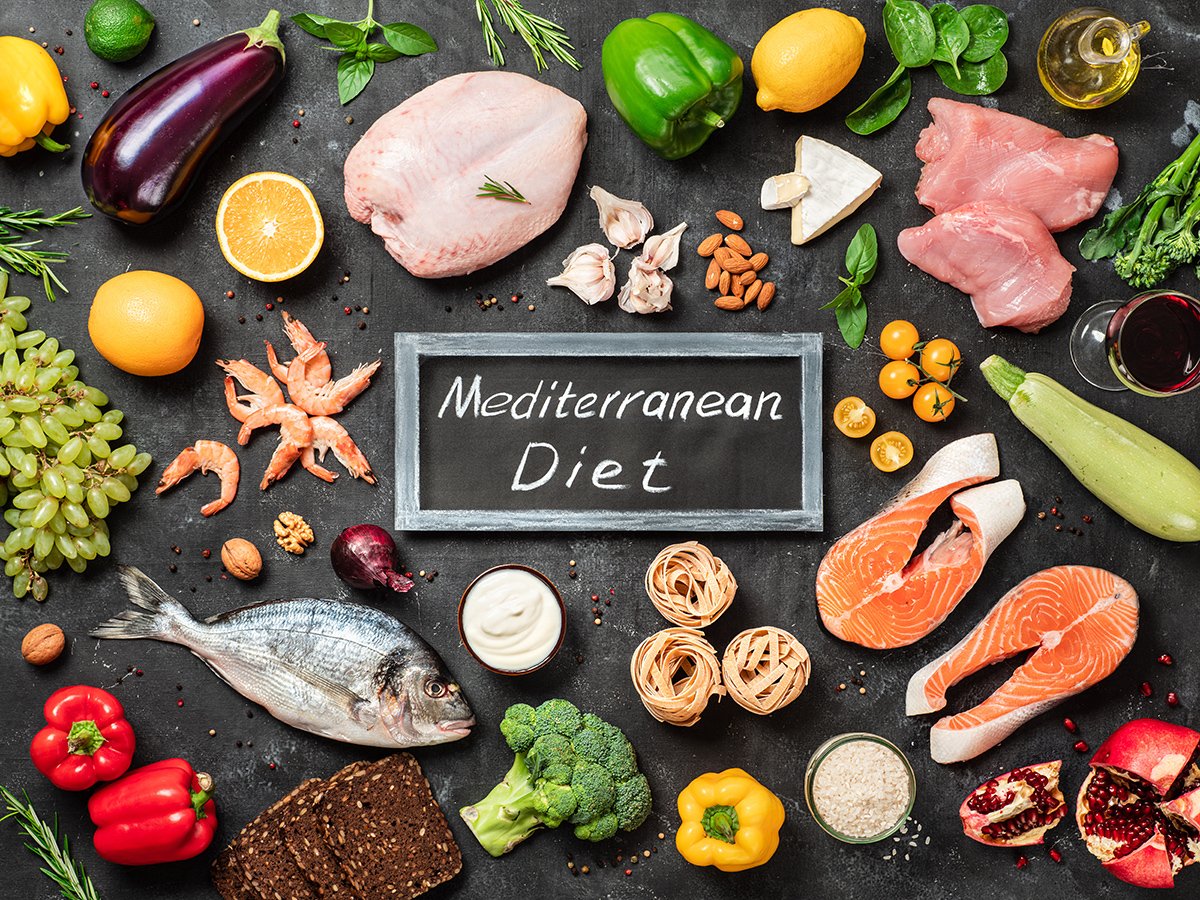
Mirror, mirror on the wall, what is the best heart diet of them all? This is the million-dollar question. While there is no million-dollar answer yet, I can tell you that the Mediterranean diet is a big winner in heart study after study.3,4 You can trust the Mediterranean diet as a very good dietary guideline for heart health and overall health. The Mediterranean diet is how people ate in Italy and Greece in the 1950s, which included: high intake of vegetables, fruits, beans, whole grains, nuts, and olive oil (as the primary fat); moderate intake of fish and seafood; low to moderate intake of dairy (mostly yogurt and cheese); low intake of red and processed meats; and limited sweets, with optional moderate wine consumption.
The Mediterranean diet is in line with my recommendations for a whole foods diet, rich in fiber, colorful veggies and fruits, healthy meats, and fats, and free of sugar and ultra-processed foods. The hunter-gatherer diet is what humans evolved with and it gives us the maximum health benefit.5
Because we want to decrease inflammation and blood sugar, it is very important to avoid all ultra-processed foods, sugar, and sweets as much as humanly possible. After all, they don’t have any redeeming value, save for a hit of deliciousness on the tongue. In fact, when ultra-processed foods were introduced into our diets during the industrial revolution, the incidence of heart disease, diabetes, and gum disease skyrocketed.5,6
When Grandma said, “eat your vegetables,” she wasn’t joking! Cover your plate in 50% to 75% colorful vegetables. Plants are anti-inflammatory and full of vitamins, minerals, antioxidants, and phytonutrients that keep blood vessels healthy.
Certain plant foods high in nitrates work double-time for your heart and your mouth. That’s because they boost your oral microbiome. When you eat foods high in nitrates, you are feeding your friendly mouth bacteria. In turn, those good bacteria promote healthy blood pressure in the optimum range.
The DASH diet (Dietary Approaches to Stop Hypertension) overlaps with the Mediterranean diet, but was clinically designed to lower blood pressure, so it stands out for its specific limit on salt. It emphasizes vegetables, fruits, whole grains, beans, nuts, low-fat dairy, and lean proteins while limiting sodium, processed foods, sugar, and red meat. In clinical trials, the DASH diet significantly lowered blood pressure within weeks — even without weight loss.
While the ketogenic diet has been popular for different purposes in the last 10 years, I do not promote it for heart health. The keto diet is pretty good at raising cholesterol numbers in most people. I personally know of a case where a keto diet increased new plaque accumulation in arteries. Dr. Decker Weiss, naturopathic cardiologist told me, “The keto diet is the fastest way to build coronary plaques.” I would pass on the keto diet if you are struggling with heart disease. Weiss recommends a plant-based diet with lean proteins, free of red meat, and low in oil for his toughest heart patients that have failed all conventional treatments (similar to the Dean Ornish diet).7 When combined with other metabolic factors in the optimum ranges, such as blood sugar, homocysteine, and oxidized LDL, he has seen this diet clear coronary plaques when eaten consistently for 1-3 years. He says, “There are many factors involved in clearing heart disease, but a high-animal-fat diet is the way to build plaques, not clear them.”
However, each person is different and that is why there is no million-dollar answer for the best heart health diet. If you have chronic cardiovascular issues, you should work with an integrative and functional cardiologist and/or functional nutritionist to customize the best diet for you. Then, make sure it is working for you by monitoring your cardiovascular health with testing.

#3. Get Moving
If you are sitting at a desk right now reading this, then chances are good you do a lot of sitting. Our lifestyles are far too sedentary. We are a long way from our ancestors who were hunters and gatherers. Humans used to have to exercise in order to eat. Now adults can sit all day (or stand) and earn the money we need to buy food. Grade schools have minimized physical education and recess time for children. Kids- and adults- are stuck on screens.
Our bodies are made for movement. There’s no question that exercise builds a healthy circulatory system. Exercise lowers blood sugar and blood lipids, and relaxes and softens arteries so they can pump blood better, calms inflammation, and lengthens life.8-11 It encourages heart cells to synthesize mitochondria (power houses) and delivers more oxygen to the body and heart.12 So the question is, how much can you do? How much should you do? The Physical Activity Guidelines for Americans recommends at least 30 minutes x 5 days (or 150 minutes) each week of moderate-intensity exercise and two days of muscle strengthening. Another option is 75 minutes of vigorous-intensity exercise over two or more days each week, along with muscle strengthening twice weekly. And if you can’t do all of that yet, consider that any exercise you get is better than none.
Consider building exercise into your everyday life. Can you make sure to get activity (of any kind) every day? Check out Dr. Tiffany Caplan’s blog; she gives tips on how to exercise, even for people who are struggling with autoimmune pain conditions. No matter how bad off, staying active keeps your brain, heart, muscles, liver, and vessels in motion. It turns on cells so that they can take in nutrients and get rid of waste. We all could stand to bring more physical activity into every day.

#4. Boost Oral Health
Did you ever think that you could improve your cardiovascular health by brushing and flossing more? It sounds strange, but flossing and brushing decreases your risk of heart disease, heart attacks, and stroke.13 On the flip side, if you have gum disease, your risk for heart attack is nearly 50% higher14 and your risk of coronary vascular disease is up to 20% higher.14,15 This connection between the mouth and the heart is known as the oral-systemic connection.
It turns out that one of the root causes of heart disease is bad bacteria that contribute to gum and mouth infections. These bad bacteria have a direct line to the heart, sparking inflammation and damaging blood vessels. They can set off an immune response,16 inflammation in arteries,17 and contribute to buildup of atherosclerotic plaques that can rupture and block vessels, potentially causing a heart attack or stroke.18 They have even been found in atherosclerotic plaques after heart attack or stroke.
If you have bleeding gums, swollen gums, or painful chewing, bad bacteria in the mouth could be contributing to your heart problems. Bleeding gums could also be a sign that your gums and mouth tissues are damaged, leading to a state of “leaky gums” or leaky mouth. When the barrier in the mouth is compromised, it can open up the whole body to inflammation that comes from the mouth. And inflammation spells trouble for the cardiovascular system. We want to nip that in the bud.
For dentists and clinicians trying to prevent or reduce heart disease, a major goal of treatment should be to minimize the levels of these pathogenic mouth bacteria as much as possible.18
- Porphyromonas gingivalis
- Tannerella forsythia
- Treponema denticola
Luckily, you can turn your oral microbiome around by shoring up your dental hygiene, testing the oral microbiome for these troublemakers, and rebalancing mouth bacteria.

#5. Build A Healthy Heart with Vitamins and Minerals
How is it that the heart can keep going and going and never stop, until we are at the end of life? This “Energizer Bunny” effect is because the heart is chock full of mitochondria- the powerhouses of the cell. Every cell of the body requires mitochondria to make fuel or ATP (adenosine triphosphate). Without enough ATP, your cells cannot do the work they are supposed to do. “The heart is your body’s battery,” Stephen Sinatra, MD, an integrative cardiologist often said. When cells are all charged up with fuel or ATP, the heart works well. Blood and oxygen are circulating well; you have more energy, you can meet your workout goals, you can think more clearly and focus, and much more.
When it comes to building up the heart, the heart and all of its mitochondria should be topped off with a good quality vitamin and mineral supplement so it can operate at top capacity. Beyond that, my two favorite heart health supplements are CoQ10 and L-carnitine. Both CoQ10 and L-carnitine are safe even with high doses and have no side effects or toxicities. 19-22
Stephen Sinatra included CoQ10 and L-carnitine in his “Awesome Foursome” recommendations for heart health supplements, too.
Dr. Stephen Sinatra’s “Awesome Foursome” for Cardiovascular Health
- CoQ10 (Ubiquinone)
- L-Carnitine
- D-Ribose
- Magnesium
CoQ10 and L-carnitine are critical for powering up the mitochondria in the heart. So, when a person’s heart is flagging, these are the vitamins for heart health that may be running low. Research shows CoQ10 supplements have powerful benefits for even weak and struggling hearts.20,23-25 CoQ10 improves how much the heart can pump and how consistently.26 It also helped nourish the heart after heart attacks26 and reduced the risk of serious outcomes in hospitals.27,28
L-Carnitine does wonders for heart function. L-Carnitine lengthens lives, helps normalize the heart rhythm, and reduces chest pain.29 The heart pumps better, pumps more blood,28,30 and can maintain a better rhythm with L-carnitine.31 In fact, the heart seems to heal when L-carnitine is given.21
DaVinci Labs’ 100 mg CoQ10 tablet is a popular orange-flavored tablet that melts in your mouth. An Organic Acids Profile urine test can help figure out if you need L-carnitine or CoQ10. Learn more in my article on these nutrients and their benefits for heart health.

Image by Gerd Altmann from Pixabay
Turn Heart Disease Around with Diet & Lifestyle
Cardiovascular health is not a mystery. It’s a known. Most people do not realize it is often preventable and, in many cases, reversible. What you eat and how you move your body are critical for whether you develop inflamed, damaged, stiff, clogged arteries– or not. Your blood sugar, your oral health, and whether or not you have the essential vitamins for healthy circulation play heavily into the equation, too. Heart disease cannot be fixed by simply taking your daily cholesterol medications. Cholesterol is one single factor in a much bigger picture. If you can significantly change your lifestyle, you can turn around symptoms such as chest pain, high blood pressure, and decrease the risk of heart attack or stroke.
Conventional medicine focuses on medications to control cholesterol, blood pressure, or glucose, usually after your lab results are bona fide out of normal reference ranges. But you don’t have to wait until your lab tests are “abnormal” by conservative standards to take action. Pay attention to your heart health lab tests before there’s a problem, and especially if your mom, dad, siblings, or other family members died of heart disease. If you do that, you can turn things around earlier, quicker, and easier. Integrative and functional medicine practitioners use different reference ranges -optimum targets- for blood glucose, hemoglobin A1c, and insulin. At the first sign that your metabolism is going awry, they are addressing the root causes of heart disease. They will work with you to optimize blood sugar, calm inflammation, improve the microbiome, strengthen mitochondria, and encourage movement. Integrative and functional medicine practitioners will help you find the best diet for coronary heart disease and get you started on high-quality supplements for heart health.
Changing our daily habits takes willingness and work, but it pays off. When we don’t want to be yet another heart disease statistic, it’s all about those small, daily habits — how you eat, move, manage stress, care for your mouth, your supplements, and getting your blood sugar dialed in. When you have your heart health, you can live longer and stronger, with more time for your loved ones and making your impact on the world.
Action Steps to Reverse Heart Disease
- Eat a Mediterranean-style, whole foods diet rich in vegetables, fiber, olive oil, fish, beans, and nuts.
- Fill 50–75% of your plate with colorful vegetables.
- Avoid long-term ketogenic and carnivore diets if you have heart disease.
- Test early and aim for optimal blood sugar ranges, not just “normal” standards.
- Glucose 75–85 mg/dL
- Hemoglobin A1c < 5.3%
- Insulin 2–5 uIU/mL
- Lower blood sugar by eliminating sugar and ultra-processed foods.
- Support normal blood sugar with products like Berberine Force or GlucoSynergy from DaVinci.
- Manage stress daily, because stress raises blood sugar and fuels inflammation.
- Get physical activity every day (at least 150 minutes weekly, plus twice a week strength training).
- Test and balance your oral microbiome with a holistic or biological dental provider.
- Support mitochondrial energy with a multivitamin mineral, plus CoQ10, L-carnitine, magnesium, and D-ribose.
- Calm inflammation through sleep, movement, and whole foods.
- Work with an integrative and functional medicine practitioner to personalize your plan.
This blog is dedicated to Mike Dooley, my father, who has been on a long and arduous quest for natural cardiovascular health. I learned so much on the journey with him. Thanks to Dr. Decker Weiss, ND for sharing his expertise in naturopathic cardiology.

Since 1973, DaVinci Laboratories has been a leader in nutritional research, product development, and innovation. Our dedication to higher integrity and insistence on superior quality are reflections of our core values. Our team of experts is always willing to assist you in matters relating to nutrition. Today, DaVinci? continues to set new standards for quality and product innovation to keep you as healthy and informed as possible.
References
- Ni W, Ni Q, Jiang R, et al. Association of insulin resistance indices with major adverse cardiovascular events in patients with acute myocardial infarction and chronic Kidney disease: a retrospective cohort study. Annals of medicine. Dec 2026;58(1):2612790. doi:10.1080/07853890.2026.2612790
- Pliszka M, Szablewski L. Insulin Signaling in Alzheimer’s Disease: Association with Brain Insulin Resistance. International journal of molecular sciences. Jan 26 2026;27(3)doi:10.3390/ijms27031222
- Mlynarska E, Kurcinska J, Kurcinski S, et al. The Mediterranean Diet in Primary and Secondary Prevention of Coronary Heart Disease: Evidence and Mechanisms. Nutrients. Nov 20 2025;17(22)doi:10.3390/nu17223617
- Martinez-Gonzalez MA, Bes-Rastrollo M, Sayon-Orea C, et al. Wine consumption, Mediterranean diet, and cardiovascular risk in two Spanish cohorts. European heart journal. Feb 11 2026;doi:10.1093/eurheartj/ehaf1081
- Adler CJ, Dobney K, Weyrich LS, et al. Sequencing ancient calcified dental plaque shows changes in oral microbiota with dietary shifts of the Neolithic and Industrial revolutions. Nat Genet. Apr 2013;45(4):450-5, 455e1. doi:10.1038/ng.2536
- Touvier M, da Costa Louzada ML, Mozaffarian D, Baker P, Juul F, Srour B. Ultra-processed foods and cardiometabolic health: public health policies to reduce consumption cannot wait. BMJ (Clinical research ed. Oct 9 2023;383:e075294. doi:10.1136/bmj-2023-075294
- Ornish D, Scherwitz LW, Billings JH, et al. Intensive lifestyle changes for reversal of coronary heart disease. Jama. Dec 16 1998;280(23):2001-7. doi:10.1001/jama.280.23.2001
- Sulague RM, Suan NNM, Mendoza MF, Lavie CJ. The associations between exercise and lipid biomarkers. Prog Cardiovasc Dis. Nov-Dec 2022;75:59-68. doi:10.1016/j.pcad.2022.11.004
- Mendoza MVF, Kachur SM, Lavie CJ. The Effects of Exercise on Lipid Biomarkers. Methods in molecular biology. 2022;2343:93-117. doi:10.1007/978-1-0716-1558-4_6
- Germano-Soares AH, Andrade-Lima A, Meneses AL, et al. Association of time spent in physical activities and sedentary behaviors with carotid-femoral pulse wave velocity: A systematic review and meta-analysis. Atherosclerosis. Feb 2018;269:211-218. doi:10.1016/j.atherosclerosis.2018.01.009
- Gomes-Neto M, Duraes AR, Conceicao LSR, et al. Some types of exercise interventions are more effective than others in people with coronary heart disease: systematic review and network meta-analysis. J Physiother. Apr 2024;70(2):106-114. doi:10.1016/j.jphys.2024.02.018
- Pinckard K, Baskin KK, Stanford KI. Effects of Exercise to Improve Cardiovascular Health. Front Cardiovasc Med. 2019;6:69. doi:10.3389/fcvm.2019.00069
- Reichert S, Schlitt A, Beschow V, et al. Use of floss/interdental brushes is associated with lower risk for new cardiovascular events among patients with coronary heart disease. Journal of periodontal research. Apr 2015;50(2):180-8. doi:10.1111/jre.12191
- Rydén L, Buhlin K, Ekstrand E, et al. Periodontitis Increases the Risk of a First Myocardial Infarction: A Report From the PAROKRANK Study. Circulation. Feb 9 2016;133(6):576-83. doi:10.1161/circulationaha.115.020324
- Meurman JH, Sanz M, Janket SJ. Oral health, atherosclerosis, and cardiovascular disease. Critical reviews in oral biology and medicine : an official publication of the American Association of Oral Biologists. Nov 1 2004;15(6):403-13. doi:10.1177/154411130401500606
- Liljestrand JM, Paju S, Pietiäinen M, et al. Immunologic burden links periodontitis to acute coronary syndrome. Atherosclerosis. Jan 2018;268:177-184. doi:10.1016/j.atherosclerosis.2017.12.007
- Rangé H, Labreuche J, Louedec L, et al. Periodontal bacteria in human carotid atherothrombosis as a potential trigger for neutrophil activation. Atherosclerosis. Oct 2014;236(2):448-55. doi:10.1016/j.atherosclerosis.2014.07.034
- Bale BF, Doneen AL, Vigerust DJ. High-risk periodontal pathogens contribute to the pathogenesis of atherosclerosis. Postgrad Med J. Apr 2017;93(1098):215-220. doi:10.1136/postgradmedj-2016-134279
- Yeung CK, Billings FTt, Claessens AJ, et al. Coenzyme Q10 dose-escalation study in hemodialysis patients: safety, tolerability, and effect on oxidative stress. BMC Nephrol. Nov 3 2015;16:183. doi:10.1186/s12882-015-0178-2
- Jafari M, Mousavi SM, Asgharzadeh A, Yazdani N. Coenzyme Q10 in the treatment of heart failure: A systematic review of systematic reviews. Indian Heart J. Jul 2018;70 Suppl 1(Suppl 1):S111-S117. doi:10.1016/j.ihj.2018.01.031
- Song X, Qu H, Yang Z, Rong J, Cai W, Zhou H. Efficacy and Safety of L-Carnitine Treatment for Chronic Heart Failure: A Meta-Analysis of Randomized Controlled Trials. BioMed research international. 2017;2017:6274854. doi:10.1155/2017/6274854
- Cruciani RA, Dvorkin E, Homel P, et al. Safety, tolerability and symptom outcomes associated with L-carnitine supplementation in patients with cancer, fatigue, and carnitine deficiency: a phase I/II study. J Pain Symptom Manage. Dec 2006;32(6):551-9. doi:10.1016/j.jpainsymman.2006.09.001
- Di Lorenzo A, Iannuzzo G, Parlato A, et al. Clinical Evidence for Q10 Coenzyme Supplementation in Heart Failure: From Energetics to Functional Improvement. J Clin Med. Apr 27 2020;9(5)doi:10.3390/jcm9051266
- DiNicolantonio JJ, Bhutani J, McCarty MF, O’Keefe JH. Coenzyme Q10 for the treatment of heart failure: a review of the literature. Open Heart. 2015;2(1):e000326. doi:10.1136/openhrt-2015-000326
- Claxton L, Simmonds M, Beresford L, et al. Coenzyme Q10 to manage chronic heart failure with a reduced ejection fraction: a systematic review and economic evaluation. Health Technol Assess. Jan 2022;26(4):1-128. doi:10.3310/KVOU6959
- Sue-Ling CB, Abel WM, Sue-Ling K. Coenzyme Q10 as Adjunctive Therapy for Cardiovascular Disease and Hypertension: A Systematic Review. J Nutr. Jul 6 2022;152(7):1666-1674. doi:10.1093/jn/nxac079
- Mortensen SA, Rosenfeldt F, Kumar A, et al. The effect of coenzyme Q10 on morbidity and mortality in chronic heart failure: results from Q-SYMBIO: a randomized double-blind trial. JACC Heart Fail. Dec 2014;2(6):641-9. doi:10.1016/j.jchf.2014.06.008
- Khan MS, Khan F, Fonarow GC, et al. Dietary interventions and nutritional supplements for heart failure: a systematic appraisal and evidence map. Eur J Heart Fail. Sep 2021;23(9):1468-1476. doi:10.1002/ejhf.2278
- DiNicolantonio JJ, Lavie CJ, Fares H, Menezes AR, O’Keefe JH. L-carnitine in the secondary prevention of cardiovascular disease: systematic review and meta-analysis. Mayo Clinic proceedings. Jun 2013;88(6):544-51. doi:10.1016/j.mayocp.2013.02.007
- Agrawal V, Hemnes AR, Shelburne NJ, et al. l-Carnitine therapy improves right heart dysfunction through Cpt1-dependent fatty acid oxidation. Pulm Circ. Jul 2022;12(3):e12107. doi:10.1002/pul2.12107
- Kayikcioglu M, Ozbay B, Yagmur B, et al. Primary Carnitine Deficiency as a Treatable Cause of Heart Failure in Young Patients. Turk Kardiyoloji Dernegi arsivi : Turk Kardiyoloji Derneginin yayin organidir. Oct 2022;50(7):535-539. doi:10.5543/tkda.2022.21319
Cass Nelson-Dooley, MS, is a researcher, author, educator, and laboratory consultant. She studied medicinal plants in the rain forests of Panama as a Fulbright Scholar and then launched a career in science and natural medicine. Early on, she studied ethnobotany, ethnopharmacology, and drug discovery at the University of Georgia and AptoTec, Inc. She joined innovators at Metametrix Clinical Laboratory as a medical education consultant helping clinicians use integrative and functional laboratory results in clinical practice. She owns Health First Consulting, LLC, a medical communications company with the mission to improve human health using the written word. Ms. Nelson-Dooley is an oral microbiome expert and author of Heal Your Oral Microbiome. She was a contributing author in Laboratory Evaluations for Integrative and Functional Medicine and Case Studies in Integrative and Functional Medicine. She has published case studies, book chapters, and journal articles about the oral microbiome, natural medicine, nutrition, laboratory testing, obesity, and osteoporosis.

